


DIY Manual + Video HowTo
The set includes:
Step by step video instructions
- English Language
- English Subtitles / Closed Captions
- 212 minutes (=3.5hrs!)
Full color DIY manual
- 76 pages, full colour
- Step-By-Step Assembling With Images
- Help Section, FAQ
- Links to other inventions
Free online updates
- Free 1:1 Scale Construction Plans
- Free CAD Files
Pre-Assembled DryCell Kits:
Our DIY kits come with pre-assembled components for your own DryCell with assembly instructions. You just need distilled water, a battery (or any other power source) and some common workshop tools. Note: The DryCell kits are hand made by our team in Germany. Please use an online translator to order.

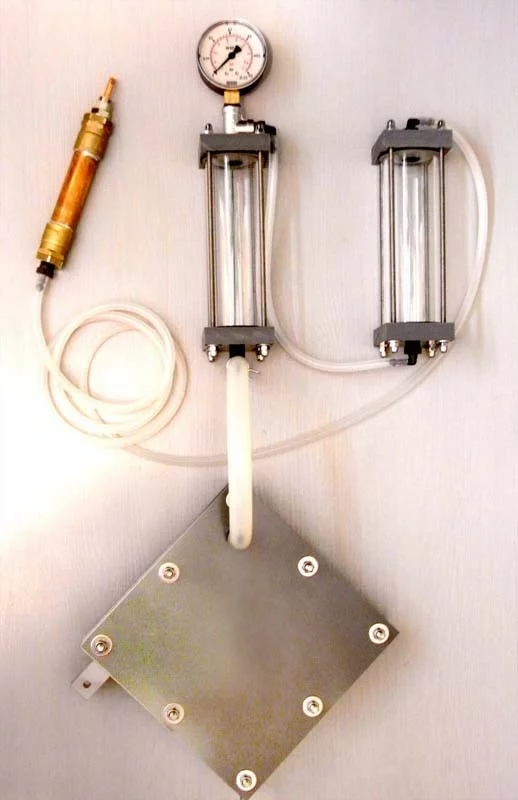

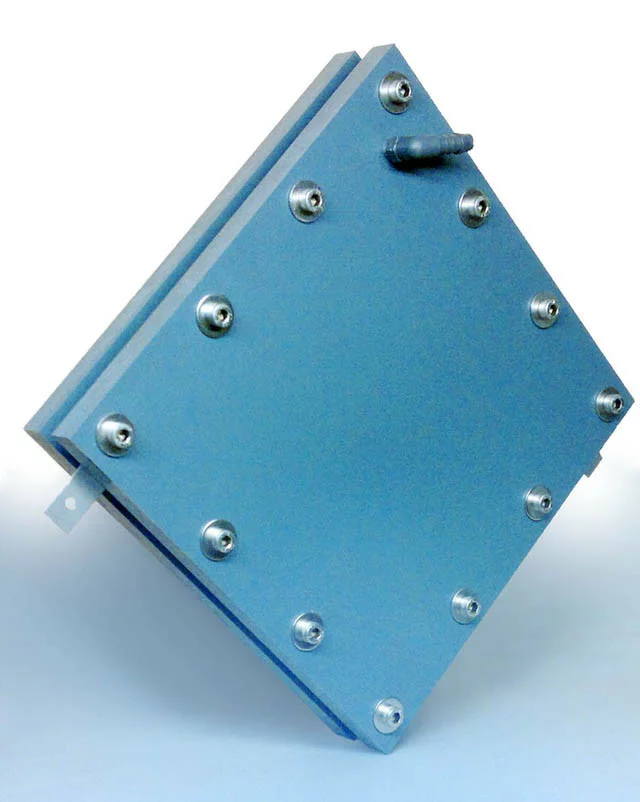
Our DryCells are custom made in Germany. We manufacture in a small series of highest labour input and quality.
How It Works

It is a simple technique to efficiently convert water into flammable oxyhydrogen gas. The electrolysis of water is an old invention and even works with materials from the hardware store. The gas is cheap to produce and environmentally friendly. It is flammable and contains more energy than crude oil or natural gas.
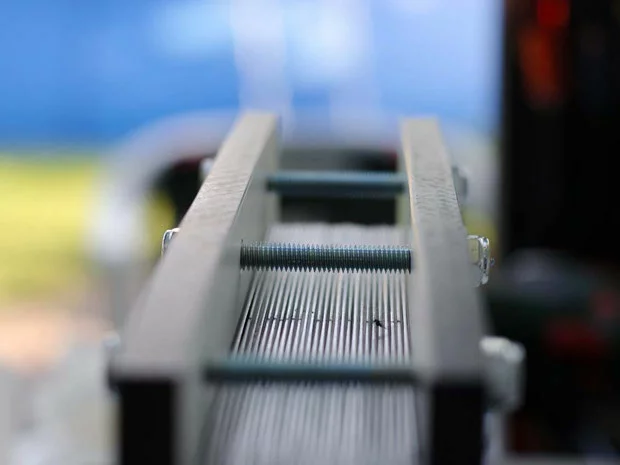
The principle is as ingenious as it is simple: All you need is mild soapy water and electricity for electrolysis (the best is from photovoltaic or wind power). The many narrow steel plates are highly efficient. In-between those plates there is a very mild soapy solution (3% soap in distilled water). By applying power to the plates, a large volume of flammable gas is produced.
The energy of course just comes from the water itself. Yes, water is full of energy. It`s why we drink it. Thus the electrolysis is just a stimulus, like a piece of flint, a cranking motor or a skipper setting sails. They all just unleash other (and much more powerful) energies. The gas can by ignited immediately and used e.g. for welding, heating or as an additive in combustion engines to save fuel. We explain all these experiments in the DIY manual.
For comparison:
1kg of crude oil = 35 MegaJoules
1kg of H2 = 120 MegaJoules
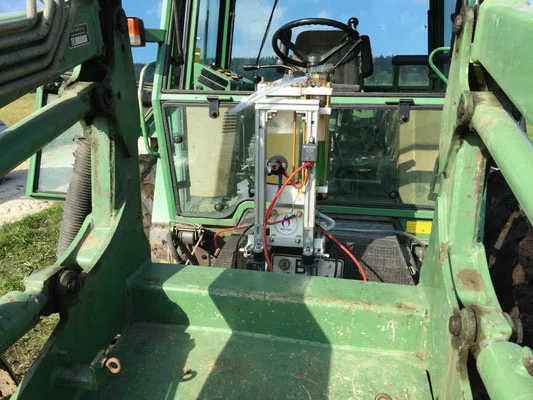
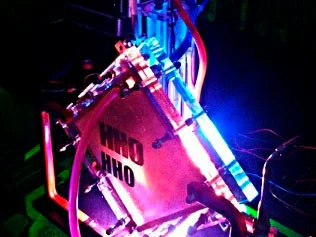
Customer Photos and Videos

FAQ
Are these fuel cells?
No, they are exactly the opposite! Fuel cells make electricity
from oxygen. The DryCell makes oxyhydrogen from water and
electricity.
The DVD won't work on my player!
This is
a dual layer NTSC format DVD. Try watching the film on a
computer or chose the download version.
How do I get the password to the customer
area?
All customers who obtain the DIY manual
will get a password to the customer area.
I want to become a member of your
organisation!
We are no association. There is no membership. We are a free
group of friends trying to help the planet before we leave.
The electrolysis is an inefficient loop way! Why not
heat electrically?
This is what Michael Faraday said 200 years ago. Today we have
much more efficient materials and equipment, even from the
local hardware store. And as we know today, the energy from the
oxyhydrogen is already stored within the water. So the
electrolysis is just a stimulus for fission, and this is no
closed energy circle at all. We explain this in the DIY manual.
Where can I find such DIY workshops in my
area?
The DryCell is Open Source, so anyone can join in, replicate
and develop free of charge. So we usually do not know who is
offering workshops.
Why do you call this a 'DryCell'?
The
unit is traditionally called a 'DryCell' to distinguish it from
Michael Faraday’s 'WetCell' from the 1830's. Of course the
DryCell also uses water for the electrolysis, but only very
little. It is much more efficient.
What is the 'WetCell'?
An older variant
from Faraday's times. The Audi car owner also uses one in his
car. Basically it is just a jam jar with a spiralled coil
inside. We think it is rather ineffective.
Can I use the DryCell in my car to save
fuel?
Usually yes, but that depends on your car's
engine. Also please check if this is legal in your country. We
explain this a lot more detailed in the DIY manual.
Can I use the DryCell for heating?
Yes,
and we even explain a lot of fascinating heating experiments in
the DIY manual.
What else can I do with oxyhydrogen
gas?
You can flamelessly heat with our DIY sand
heater, use it for welding, melting (even tungsten melts within
seconds!), you can boil water (the flame even burns
underwater), use it as a lime light, you can power combustion
engines and even remove radioactivity, and lots of other
fascinating experiments. We explain ALL of these experiments in
the DIY manual. You will definitely love this.
I want to store this gas.
Don't work
against nature. Hydrogen (H2) has the smallest and lightest
atoms of all. It instantly ascends and dissolves through every
material, it even goes through walls and roofs right into the
atmosphere. This makes storage totally useless. So we never
store it! We simply make it on demand.
Aren’t there patents?
The DryCell is a free invention, free of patents (they are long
expired). It is even Open Source. So anyone can join in,
replicate and develop free of charge. No more secrecy. No more
hiding! The invention is additionally protected by an
international safeguard organisation.
What’s the efficiency of the DryCell?
A decent DryCell draws about 130-160Wh to make 1 litre of
oxyhydrogen gas per minute. This is about 390-480Wh for
3l/min., or approx. 650-800Wh for 5l/min. Values may vary
depending on actual setup and other factors. Skilled hobbyists
can absolutely undercut these values. These are very good
results already. But we don’t really think about efficiency at
all. We do this for self-sufficiency and a better planet. And
we love to do experiments. More about this in the DIY manual.
Are there scientifically approved
measurements?
We are in contact with established Universities in Europe. But
do not expect them to work at the speed of free market economy.
We know they could have refuted us with ease if we were all
wrong. Fact is: We have a working device here. We are just
waiting for their explanation of what is really going on here.
To all doubters: Build and measure for yourself! You wouldn’t
believe us anyway, right?
You can't power cars with this, or heat efficiently.
Never!
Of course we can. This is no closed energy
cycle, so there is no violation of the energy conservation law.
Electrolysis has developed since Michael Faraday 1830. And we
have far better materials, even from the local hardware store.
Third, water is full of energy. That's why we drink it. All the
energy from the oxyhydrogen is already stored within the water.
Thus the electrolysis is just a stimulus for fission. Ignoring
water as an energy source would be like ignoring the fuel in a
car, and then claiming the car would run on battery.
Why didn’t we hear from you in the news?
Short question, long answer. We explain this in detail in the
DIY manual.
What are the DIY material costs?
You need approx. 400 USD for the DryCell, depending on make and
size. A sturdy switching power supply starts from approx. 250
USD. Instead you can simply use lead batteries of any
standalone photovoltaic system for powering the DryCell. And of
course you will need some common tools to assemble.
Where to obtain all the parts for DIY
assembling?
At your local hardware store. Some
parts you might also find in computer stores or wholesale
markets. Improvise. Nature is not standardized. In case of
trouble, team up with neighbours, work colleagues and friends.
This will reduce costs and is much more fun, too.
Where can I find others?
Look for like minded people among partners, friends, neighbours
and work colleagues. It’s about time for synergy and
cooperation. And of course there are a lot of web forums. But
we do not have contacts there, we do not even watch these
forums and we do not care what is going on there.
SeeLinks.
How to power the DryCell?
You can use a
car battery, a stand-alone photovoltaics system, a switching
power supply (for power grid use), a toroidal transformer, or
whatever you find is appropriate. Improvise! Luckily nature is
not standardized :-)
How much Volts/Amperes does the DryCell
need?
Our DryCells draw 3-5A only for most
applications (welding, underwater flame, flameless sand heater,
limelight,...). In the first minutes during a power up, a cold
DryCell can easily draw up to 15-30A, if you just let
her. Our DryCells use 1.7V-2.4V per chamber, depending on
the operating temperature. One always builds a DryCell to match
the existing power supply and intended
usage.
But this gas is explosive!
Yes, this is
exactly why we use it. And we are absolutely careful in what we
do. We work in small scale, we just produce on demand, we do
not store any gas and we take precautions to stay safe.
Remember, this is a technical experiment with chemicals,
electrical energy and fire. These are real energies we are
working with. But we are all grown up and responsible. So team
up with friends, neighbours and work colleagues! This is much
more fun and will save you a lot of money, too.
I have no technical experience!
Decide
for yourself if this is something for you. This is not intended
for the average customer who demands off-the-shelf solutions.
We show you technical experiments which are still undergoing
development. They can still contain errors and are therefore
intended for adults only. You will need technical skills,
patience and enthusiasm. Team up with colleagues, friends and
neighbours, this is more fun and makes it easier. Consult an
authorized specialist if you are uncertain what to do.
The DryCell is Open Source, why does this DIY manual
cost real money?
Relax, you don't have to pay
anyone anything! The knowledge is Open Source, you find our
instructions on Youtube. While the printed manual and the DVD
were hard work for all of us, by obtaining a copy you help us
continue our development. We think this is fair.
They say on the web that this is just a
hoax.
Many people would rather believe in theory than reality. Some
might even be paid debunkers. Who pays debunkers to run down
Open Source...?
